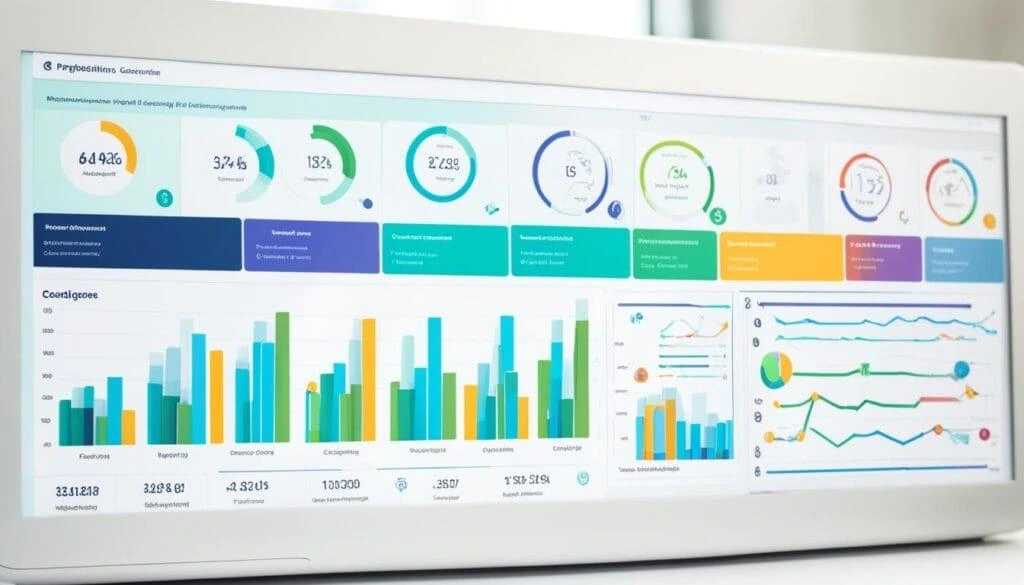
Traditional education systems often rely on grades and exam scores to measure student performance. However, modern educational research suggests that these metrics do not fully represent true learning mastery. Artificial intelligence introduces new ways to measure learning growth through continuous analytics and competency-based evaluation.
AI-driven learning systems track multiple dimensions of student progress, including engagement patterns, knowledge retention, problem-solving ability, and concept mastery. Instead of evaluating learners at a single point in time, these systems monitor growth continuously across the learning journey.
Recent studies highlight the effectiveness of predictive learning analytics in identifying mastery levels. These systems use behavioral data such as revision frequency, error correction patterns, and response consistency to estimate how well a learner has internalized a concept.
Competency mapping is another key innovation. It allows educational platforms to break down complex subjects into smaller skills and track progress at a granular level. This helps educators identify specific strengths and weaknesses rather than relying on general performance indicators.
AI-based assessment systems also enable adaptive testing, where question difficulty changes dynamically based on learner responses. This provides a more accurate measure of knowledge depth and understanding.
Overall, metrics for mastery represent a shift from outcome-based evaluation to process-based learning analysis. This approach provides a more complete understanding of learner development and supports personalized education strategies.