
NAVIGATION
Altiora Ascend
Performance Intelligence
Voxence
Communication Fluency
Altiora Lexis
Retention Systems
AI-Driven Curriculum Personalization
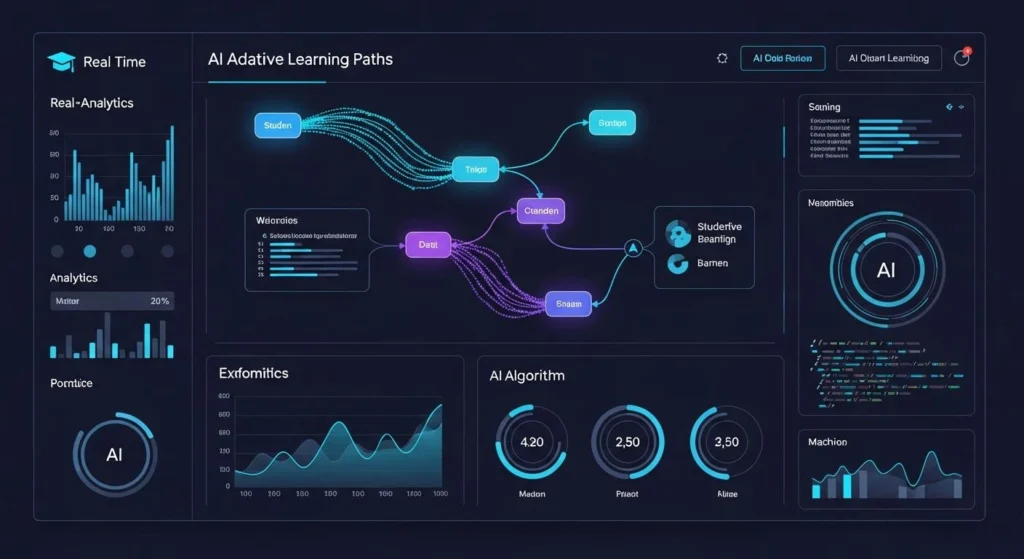
Recent advancements in artificial intelligence have significantly transformed how educational content is designed and delivered. Traditional curriculum models follow a fixed structure where all learners progress through the same material at the same pace. However, modern AI-driven systems introduce dynamic curriculum personalization, where learning paths are continuously adapted based on individual performance, behavior, and cognitive preferences.
AI models analyze large volumes of learner data, including quiz scores, interaction time, response accuracy, and revision frequency. Using this information, the system identifies knowledge gaps and predicts future learning needs. Instead of waiting for final assessments, the platform actively adjusts the curriculum in real time. For example, if a learner struggles with a specific concept, the system automatically introduces simplified explanations, additional exercises, or alternative learning formats such as visual or interactive content.
A key innovation in this area is the integration of machine learning and deep neural networks to map learner behavior into personalized learning pathways. These models can detect subtle patterns in engagement, allowing the system to recommend the most effective sequence of topics for each individual. Recent studies also highlight the use of transformer-based architectures to simulate learning progression and generate adaptive content recommendations based on evolving learner understanding .
Generative AI is also playing a growing role in curriculum design. Instead of relying on static course material, systems can now create real-time customized learning resources such as quizzes, summaries, and practice scenarios tailored to each student’s current level. This ensures that learners are consistently challenged but not overwhelmed, maintaining optimal cognitive engagement throughout the learning process .
The benefits of AI-driven curriculum personalization are significant. Studies show improved learner engagement, higher completion rates, and better long-term retention when compared to traditional learning models. Additionally, educators gain valuable insights into student progress, enabling more targeted intervention and support.
However, challenges remain. Issues such as data privacy, algorithmic bias, and limited access to technology must be addressed to ensure equitable implementation. Despite these challenges, AI-driven curriculum personalization represents a major shift toward truly learner-centered education, where instruction adapts to the individual rather than forcing the learner to adapt to the system.